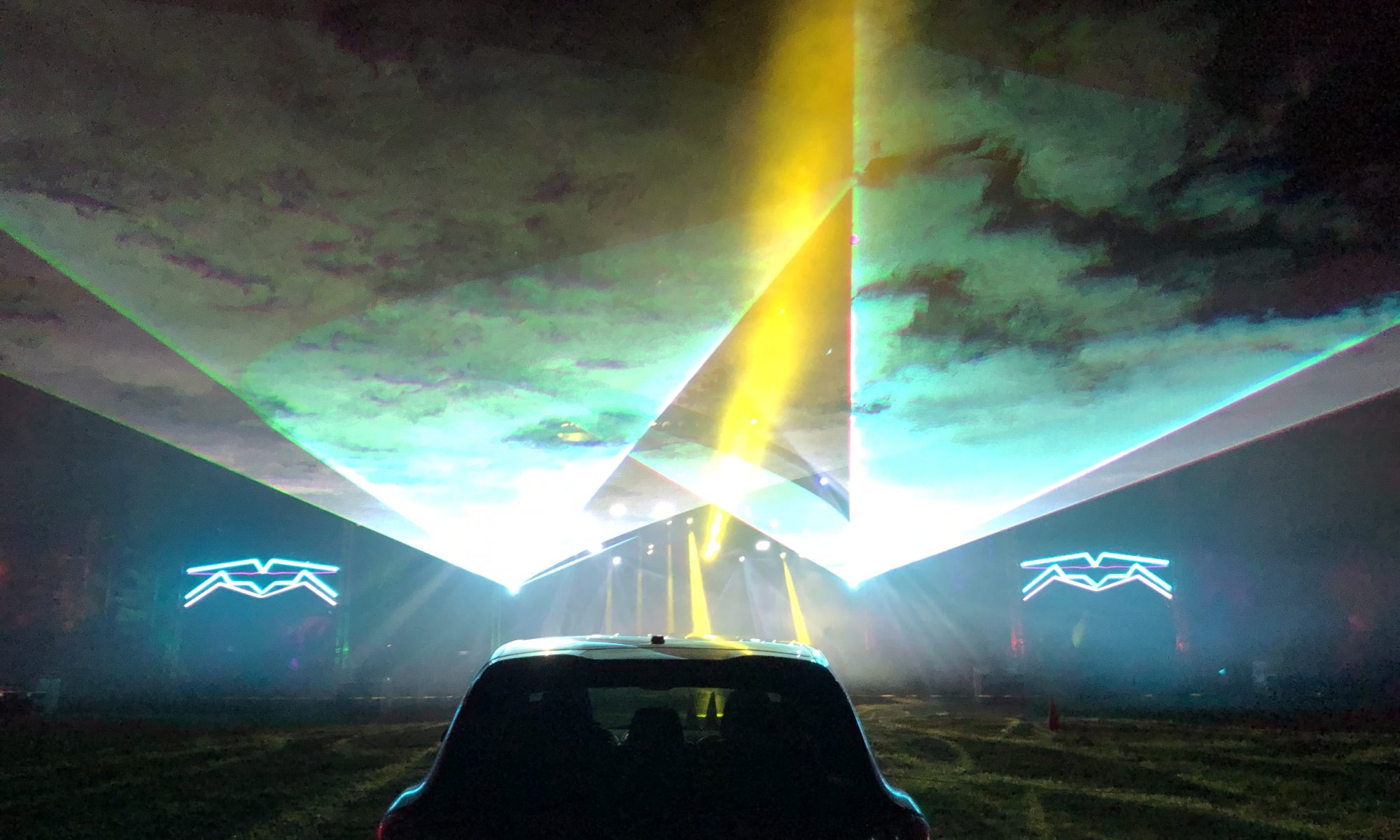
A drive-in holiday laser light show is exactly what it sounds like. Guests stay in their cars, tune their radios to the show’s FM station and watch lasers fill the sky in time with the music. It’s comfortable for every age group, easy to control and surprisingly immersive. With the car windows down and the radio up, the whole lot becomes one big audience.
Electric Holiday Miami has run drive-in laser shows at Homestead-Miami Speedway, benefiting Toys for Tots, and at Amelia Earhart Park in Hialeah. Here’s how a drive-in show works and what it takes to host one.
How guests experience it
- Arrival. Cars enter through a check-in point and staff direct them to a parking space facing the show.
- Tune in. A sign at the entrance, and often the staff, tells guests which FM frequency to use. Pre-show music and announcements are already playing.
- Pre-show. In 2020, our Homestead show ran a 30-minute pre-show with crowd participation games over the radio before the main event.
- Main show. Lasers, lighting and effects are timed to the music on the radio. Our 2020 main show ran about 45 minutes.
- Exit. Staff release rows in order so traffic flows out smoothly.
Why choose a drive-in format
- Comfort. Grandparents, toddlers and guests with limited mobility watch from their own seat.
- Weather tolerance. Light rain that would empty a lawn show is much less of a problem when everyone is in a car.
- Controlled attendance. You know exactly how many cars fit, which makes ticketing, donations and staffing simple to plan.
- Clean sound. Every guest hears the music clearly through their own car speakers, no matter where they’re parked.
What kind of site you need
A drive-in show needs a large, flat area where cars can park in rows with a clear view of the sky. Good options include racetracks, fairgrounds, stadium lots, large park fields and shopping center parking lots. When we evaluate a site we look at:
- How many cars fit with safe spacing and fire lanes
- Where the projectors can sit, usually in front of the first row in a secured area
- Entry and exit routes that won’t back up onto main roads
- Nearby light sources such as stadium or street lights, which wash out the beams
- Power, or space for a generator
How the radio audio works
The show’s music and announcements are sent out by a low-power FM transmitter that covers the parking area. Cars pick it up like any radio station. There are federal rules about how strong an unlicensed transmitter can be, and coverage depends on the site. We explain the details in our drive-in FM radio guide.
Ticketing and capacity
Drive-in events are usually sold per car rather than per person, with a limit on how many people can be in each vehicle. Selling timed entries for each showtime keeps lines short at check-in. Some organizers offer a premium tier with front-row parking. Because you know the number of spaces in advance, it’s easy to set capacity and sell out without overcrowding.
Drive-in shows and fundraising
Drive-in shows pair naturally with donation drives. Guests can hand over a toy, canned food or a donation at check-in without leaving the car. At our 2020 Homestead show, guests who brought a new, unwrapped toy for Toys for Tots received free popcorn. Read more in our Electric Holiday 2020 recap.
Planning tips
- Run multiple showtimes per night so arrivals are spread out
- Post the FM frequency at the entrance and on your tickets
- Remind guests to bring a phone charger and to turn off headlights during the show
- Have jump-start kits on site, because car batteries do die when radios run for an hour with the engine off
- Plan for wind and rain with a backup date; see our South Florida holiday weather guide
Host a drive-in night
Have a racetrack, lot or large field? Send us the site, your date and how many cars you want to fit, and we’ll design a drive-in show around it. See the Electric Holiday show on our homepage.