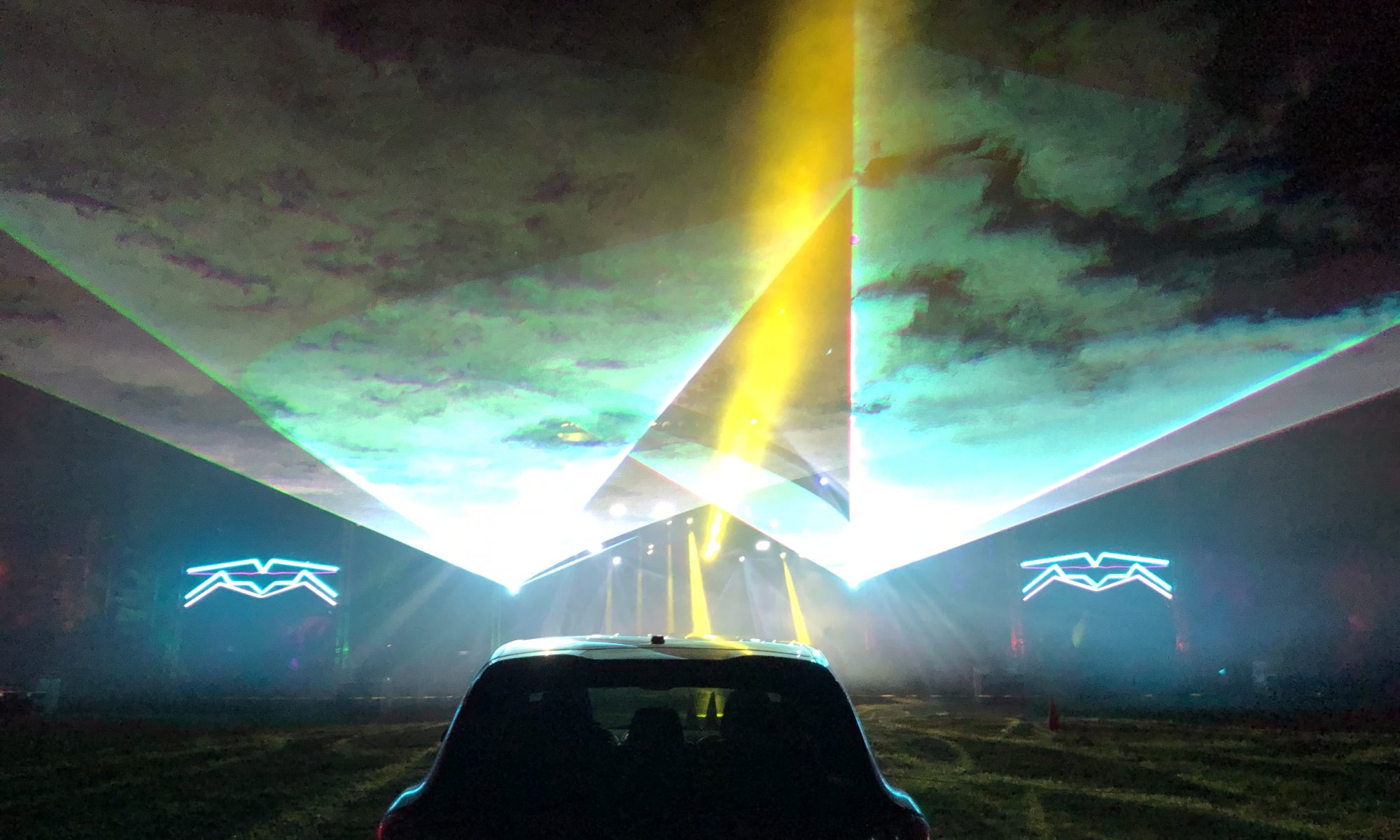
If you’re planning an event with a laser show, you don’t need to become a laser safety expert, but you should understand the basics well enough to ask your vendor the right questions. This guide explains the main federal rules for outdoor laser shows in the United States in plain language.
This article is general information, not legal advice. Rules change, so always confirm current requirements with the agencies involved and your local officials.
Why lasers are regulated
Show lasers are powerful. The same brightness that makes a beam visible across a stadium can injure eyes if a beam hits someone directly, and can dazzle a pilot if it’s aimed into the path of an aircraft. Two federal agencies handle these two risks:
- The FDA regulates laser products and laser light shows to protect audiences and the public.
- The FAA protects aircraft and airspace when lasers are projected outdoors.
The FDA and laser show variances
The FDA’s Center for Devices and Radiological Health sets performance standards for laser products. The high-powered lasers used in most professional shows, Class IIIb and Class IV, generally can’t be used for entertainment unless the manufacturer or show producer holds an approved variance from the FDA. A variance is permission to use these lasers under specific safety conditions.
Variance conditions typically cover how the show is set up and operated, including keeping beams a safe distance above and away from the audience unless audience scanning has been specifically evaluated and approved, using an operator who can stop the show immediately, and keeping records of each show.
What to ask your vendor: “Do you hold a current FDA laser light show variance, and does it cover the equipment and type of show you’re proposing?”
The FAA and outdoor laser operations
When beams go into the sky, they enter airspace. The FAA asks laser operators to submit a notice of proposed outdoor laser operations, commonly on FAA Form 7140-1, in advance of the event. FAA guidance recommends filing at least 30 days ahead. The FAA reviews the location, the direction and power of the beams, and nearby flight paths, and then responds, usually with a letter of non-objection or with conditions or concerns.
Locations near airports get closer review. South Florida has a lot of air traffic, with major and regional airports, military airfields and helicopter routes, so expect the FAA to look carefully at shows across Miami-Dade. Conditions can include limits on beam direction, beam power or show times, or a requirement for spotters who can stop the show if an aircraft approaches.
What to ask your vendor: “Will you file the FAA notice for our show, and when will you file it?”
State and local rules
On top of federal rules, states and local governments can have their own requirements. Florida has state rules for certain classes of lasers, and your city or county may require a special event permit, fire marshal review, a noise permit or proof of insurance. Your special events office is the best place to start.
Indoor shows
Indoor shows don’t need FAA notification, because beams don’t reach the sky, but the FDA rules for audience safety still apply. Indoors you’ll also need to coordinate with the venue about haze and smoke detectors.
Safety practices you should expect
- A trained operator present for the whole show with an emergency stop
- Projectors in a secured area the public can’t reach
- Beams kept above head height and away from where people stand, unless an approved audience-scanning plan is in place
- Beams terminated on safe surfaces or directed into open sky as approved, not into windows or reflective buildings
- A plan to pause the show if aircraft approach or conditions change
Timeline tip
Because the FAA recommends at least 30 days of notice, and local permits can take longer, laser paperwork should be part of your plan two to three months before the event. Our holiday event planning timeline shows where this fits.
Where to learn more
Planning a show? Read our list of questions to ask a laser show company, or tell us about your event and see the Electric Holiday show.